
Neurodivergent kids are understandably sensitive to negative feedback. Perhaps it’s because they live in a world designed in opposition to how they’re wired. Autistic and ADHD kids are bombarded daily with neurotypical demands that they cannot meet without huge sacrifices. They learn that there is something inherently wrong with them.
Here are 5 things not to say to your autistic or ADHD child.

5 Things NOT to Say To Your Neurodivergent Child
As a parent of autistic and ADHD children, I’ve learned the hard way that traditional parenting and educational strategies hurt neurodivergent children. Learning to shift my lens and my language has been huge.
Here are five things I’ve learned NOT to say to neurodivergent children. Chime in at the end and let me know what I’m missing.
1. You’re Fine
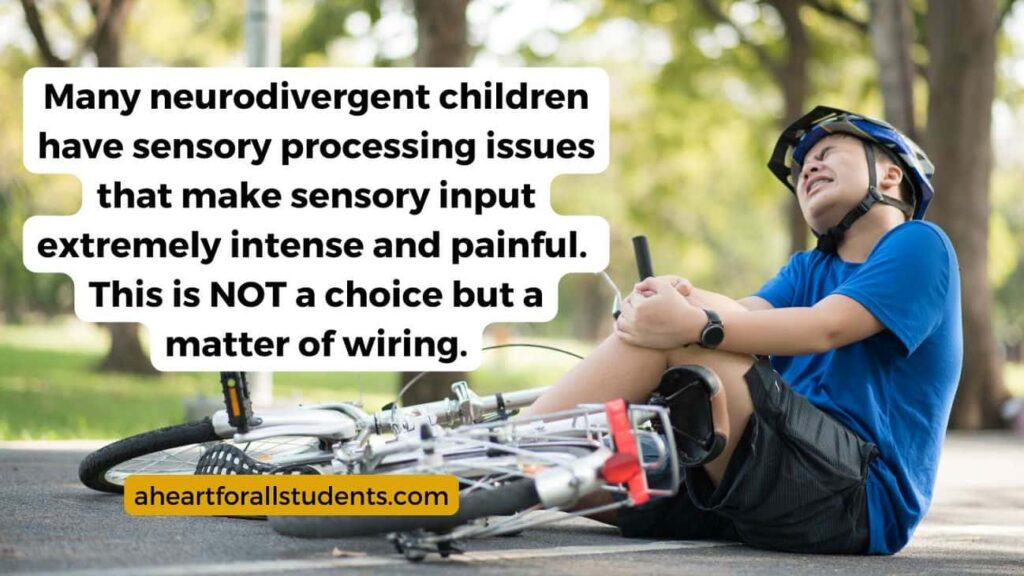
We’ve all done it. Our little one falls, scrapes their knee, and runs to us for comfort. Then we say,
You’re fine. You’re overreacting.
Nope. They’re not fine and they’re not overreacting. Even worse, the person they trust most (parent) is telling them what they’re experiencing is not real. Talk about teaching the wrong message.
This teaches children NOT to trust nor advocate for themselves. Further, it can teach them to seek approval from outsiders to tell them what they’re experiencing. This is a form of parental gaslighting.
Remember, many neurodivergent children have sensory processing issues that make sensory input extremely intense and even painful. This is NOT a choice but a matter of wiring.
What is Gaslighting?
According to Merriam-Webster, the term gaslighting refers to,
the psychological manipulation of a person usually over an extended period of time that causes the victim to question the validity of their own thoughts, perception of reality, or memories and typically leads to confusion, loss of confidence and self-esteem, uncertainty of one’s emotional or mental stability, and a dependency on the perpetrator
When an authority figure tells a child what said child feels, and it’s contrary to how the child experiences their feelings, this is a form of gaslighting.
We must teach our kids to listen to their bodies and minds. It’s called interoception. Then we teach them how to communicate their thoughts and emotional experiences to trusting adults around them.
2. You’re Not Listening
As a parent of multiple neurodivergent kids, this one stings. I have said this to my kids many times. So often, that I cringe because I can hear myself.
The problem with telling ADHD kids they’re not listening is that it shames them. It places blame on the child for something they don’t have control over yet.
Telling kids they’re “not listening” when they make a mistake is NOT helpful. It doesn’t take into account the executive functioning challenges associated with ADHD and autism. Specifically,
- Auditory processing
- Language processing
- Working memory
These three executive functions greatly impact a child’s ability to process and respond appropriately to verbal instructions. They’re not trying to be disobedient. These kids are struggling. Learn more about Auditory Processing and ADHD.
3. Try Harder
If only this statement worked, our problems would be solved. The truth is that neurodivergent kids (ADHD, autism, or both) must use more cognitive fuel than neurotypical peers. These kids have to work hard on EVERYTHING.
Telling them to try harder is like telling a serial dieter to eat less. Any activity that relies on willpower does not work long-term. Why? Because using willpower to override natural human needs requires a TON of cognitive fuel. The body and brain only have so much energy.
Willpower Doesn’t Work
Willpower doesn’t work when trying to teach an ADHD child. Research shows that during concentration tasks (focusing on a non-preferred activity), blood flow is reduced to the prefrontal cortex of the ADHD brain.
Yes. In multiple types of ADHD, the result of forced focus is decreased brain activity. “Try harder” isn’t the answer. Supporting the unique needs of your child is the answer.
4. You’re Being Lazy
Name-calling. It has to stop. Calling any child lazy because they’re struggling with a task is cruel. For neurodivergent children (ADHD and autism), the implications of being called lazy or stubborn may have more damaging effects.
According to Dr. William Dobson, children with ADHD hear more than 20,000 negative messages before the age of 10. Rejection Sensitive Dysphoria is a term used to describe the agony many autistic and ADHD folks experience due to continual negative messaging.
Friend, the messages our children consistently receive are the ones they take with them into adulthood. Our words matter.
In both ADHD and autism, challenges with executive functioning, emotional regulation, and sensory processing make everything exhausting. Our neurodivergent kids are NOT lazy. They’re exhausted. Let’s change our language.
5. Stop Making Excuses
When kids struggle with aggressive behavior, emotional dysregulation, or not completing tasks (schoolwork, chores) there’s a reason. Behavior is information.
The problem is that we adults are so used to living in a toxic world of “no excuses” that we fail to LISTEN. If we don’t listen to the why behind our kids’ behavior, we get nowhere. When your neurodivergent child tells you why something was hard, why they think they messed up, etc… It’s important to listen.
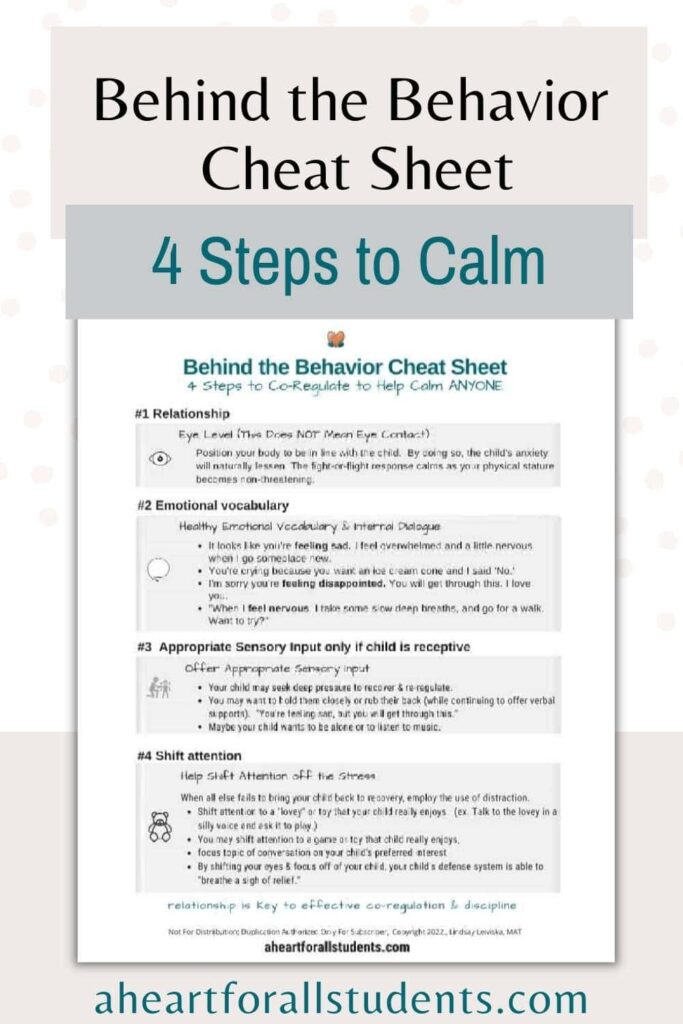
Then co-regulate with them, and offer them self-regulation tools, emotional vocabulary, and language that can help them move forward.
Recap: What Not to Say To Your Neurodivergent Child
Autistic and ADHD children are inundated with neurotypical expectations that are in opposition to how they’re wired. Over time, it’s no surprise that they come to believe there is something wrong with them.
In my journey as a parent and educator, I’ve learned that one of the most impactful things I can do for my children is to examine the language I use with my children. So, friend. Did any of these hit home? Perhaps you heard these messages when you were a kid?
What did I miss?
Up Next:
Executive Function and Healthy Expectations of Behavior
15 Best ADHD Books for Parents to Help Kids Thrive 2025
47 Emotional Regulation Activities for Kids Every Mom Needs!
25 Stim Toys for Autism and ADHD Sensory Needs

About the Author:
Lindsay is a trauma-informed educator with a Master’s Degree in Teaching. Her mission is to support moms to equip neurodivergent kids (ADHD, Autism, Dyslexia, Anxiety) to thrive as exactly who they’ve been created to be. Wait until you hear the story that led to it all…