
Playing games with a nonverbal autistic child is a great way to support them. Pairing fun and interest with learning is an effective teaching strategy. Additionally, non-speaking children benefit when parents and support people encourage connection and emotional safety over compliance. One way to do this is through games and other fun activities. Let’s dive into different activities and games for the nonverbal autistic child in your life.

Nonspeaking Not Nonverbal
While many people say “nonverbal children” when referring to kids who don’t speak, this is not accurate.
The term nonverbal indicates a child is without language. However, most young children who don’t speak do understand and can use language. (This is why we must give them the tools to do so such as AAC Alternative and Augmentative Communication.)
By understanding that communication skills are multi-faceted, we can better support and connect with young children who don’t speak, have communication disorders, or live with selective mutism. Let’s presume competence.
20 Activities and Games for a Nonverbal Autistic Child
The following list contains 20 fun activities and games for nonverbal children.
1. Spot It
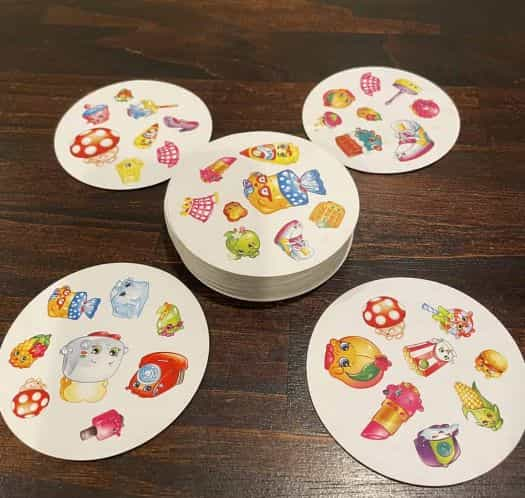
A game of Spot It is easy to play with a child who doesn’t speak aloud. Simply take turns pointing to the matching picture on the Spot It cards.
Encourage receptive language by repeating a carrier phrase for each play of the cards. For example, pointing to a red bird on a Spot-It card.
There is a red bird.
Expand language while creating connection and safety in your relationship. Creating these emotionally calm moments with your autistic child helps you both develop stronger pathways of regulation between the two of you. Your autistic child must feel safe with you if they’re ever going to be able to take direction from you.
Why Safety is Essential for the Brain
For more on the brain and its impact on emotional regulation, learning, and behavior, watch this quick video tutorial.
2. Matching Games
Using card games, especially those designed as matching games are a fun way to increase different skills.
For example, you can work on Math Skills (Using Shapes as an Example).
- Use flashcards of a number of different shapes.
- Lay them face down on the table.
- Take turns turning over a card and finding its matching shape.
Again, use a carrier phrase to reinforce receptive language skills.
- “I turned over a _____. Now I turn over a _______. I got a match/I didn’t get a match.”
Use any area of your child’s interest to encourage learning in any area. For example, if your student likes Peppa Pig, use a Peppa Pig memory game.
Losing is Hard for Neurodivergent Kids for a Reason
Autistic and other neurodivergent children live in a world designed in opposition to who they are.
This means that they’re constantly set up for failure which can make “losing” even harder for them.
Provide them with an internal narrative that tells them that losing is okay and to be expected. Do this by modeling an emotionally affirming internal dialogue.
For example, if you don’t turn over a matching pair, say something like,
- “Oh well. I didn’t get a match this time. I’ll try again next time.”
And then repeat, repeat, repeat.
3. Build Puzzles
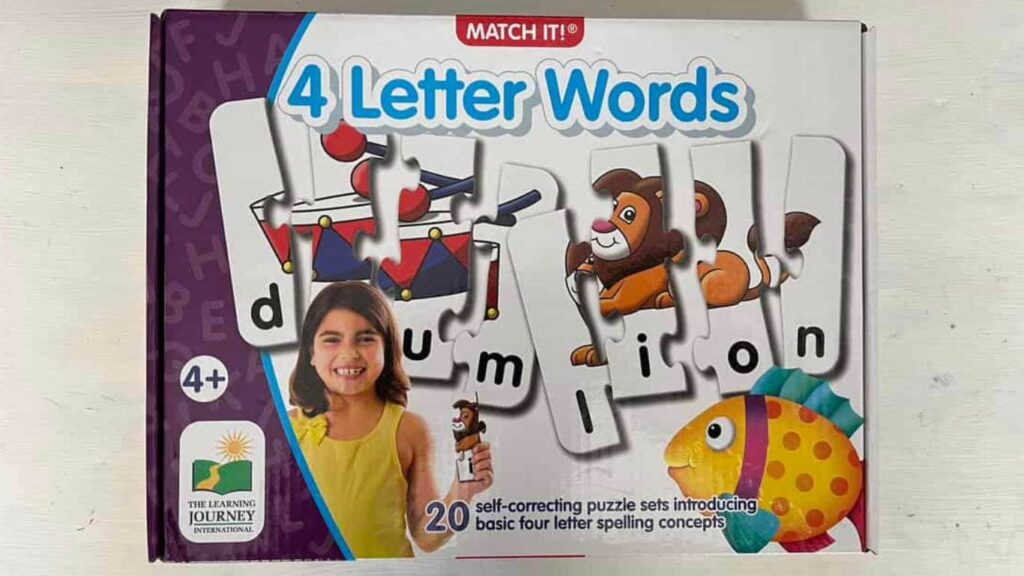
Autistic kids, like neurotypical children, often love putting together puzzles. In fact, in our homeschool, we use puzzles for just about all of my son’s special interests.
Using puzzles is a great way to reinforce any areas of learning while working on visual-spatial skills, problem-solving skills, team-building, and turn-taking. (Hint… do the puzzle with your child if they’d like your company.)
4. Build with Blocks
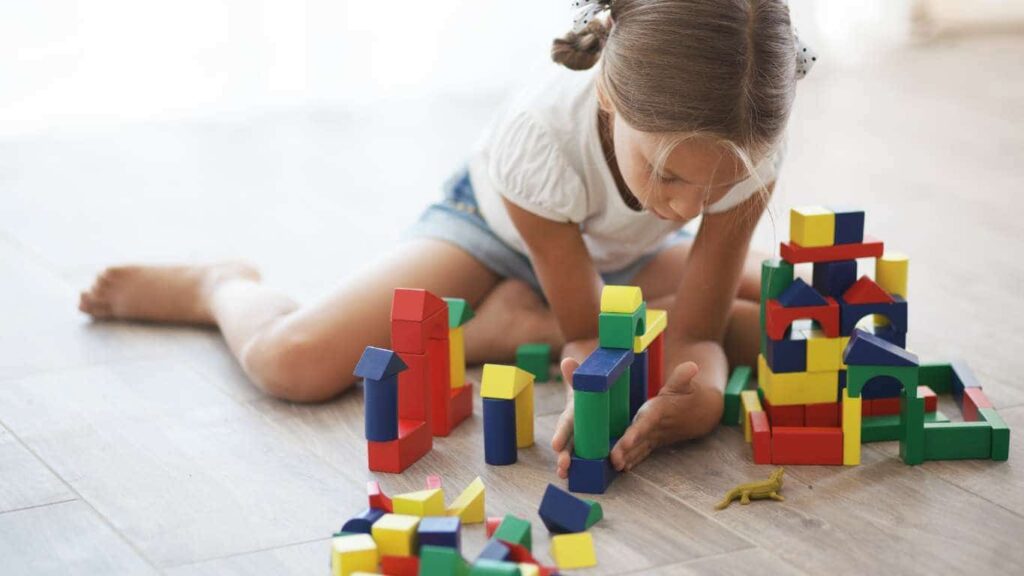
Building with blocks is a great way to increase hand-eye coordination in kids who struggle with coordination. Use blocks to model verbal language specific to:
- prepositions (in, on, above, below, etc.)
- numbers,
- colors, and more.
For example, “I put a block on top of the tower.” These solar-system-themed blocks are stunning and great for visual learners.
5. Legos
Any activity that involves building and creating is a winner for so many reasons. Legos are a perfect side-by-side activity for non-speaking and neurotypical children. Build up fine motor and problem-solving skills, visual-spatial awareness, and more.
6. Hide and Seek
Hide and seek is such a fun way to have fun without the need to speak using oral language. From the first time we play peek-a-boo with a child, we engage in this silly game of hide and seek.
One of the best things about the hide-and-seek game is the laughter and relationship building through connection. There’s nothing more important than to be sought after and found. Just like neurotypical children, nonspeaking children enjoy the social interaction of hide-and-seek.
7. Physical Play and Motor Skills
Physical play is essential for any child’s development. From infancy, movement matters. Tummy time alone supports core and neck strength that are foundational to all later motor skill development.
Surprisingly, tummy time doesn’t just set the stage for sitting, crawling, and walking. It is critical to later develop fine motor skills such as speaking and handwriting. Additionally, it’s well-known that to get an autism diagnosis, a child will struggle with some areas of difficulty with motor skill development.

Some autistic kids may appear clumsy, have a heavy gait, or have challenges throwing a ball, for example.
Fortunately, a private occupational therapist can support your non-speaking autistic child in all things motor skills. However, you don’t have to rely on one hour a week of occupational therapy. There are so many fun activities that can help autistic kids develop their motor skills through play.
8. Obstacle Courses
Set up an obstacle course in your living room. Here are some ideas for an obstacle course.
- Cushions to jump over,
- Chairs to climb over,
- A line of painter’s tape to balance across as a “tight rope”,
- Lay a hula hoop on the ground and have your child jump inside 10 times
- Have them return by crawling under the kitchen table
- Slide across the room using a tummy scooter
- Spin around in one direction five times
- Then spin them in the opposite direction 5 times (Vestibular Input)
- Jump into a crash pad at the end
Whether your child or student has higher support needs or not, this type of activity is so much fun. As always, be sure to modify it to meet your child’s needs.
Model and Make It Fun
Model using the obstacle course, offer visual cues with large hand gestures, and narrate what you’re doing.
Remember, nonverbal autistic people very often understand (receptive language) well. Give your child every opportunity to hear spoken language while they’re happily engaged.
When you use language in a playful and fun activity, kids are better able to make sense of new concepts and directions. Be sure to engage your child in the process and participate with them. Make it fun and low-pressure. Read your child’s nonverbal cues and follow their lead.
9. Sensory Play

Most young kids (and many adults) love to make Play-Doh creations. Play-Doh, clay, and kinetic sand are excellent sensory tools to support your child’s fine motor skills.
At the same time, it provides needed sensory information to the brain. Specifically, sensory activities like these provide proprioceptive input to the small joints and muscles of the fingers, wrists, and arms.
Further, nonverbal kids (nonspeaking) can use play-doh to learn:
- Letters,
- Numbers,
- Colors,
- Counting,
- Science,
- (For example, check out this ocean playdough)
Proprioception is Calming
Proprioceptive sensory input is calming to the brain and body by releasing calming neurotransmitters like serotonin. Allowing your child to play freely with Play-Doh or clay (without directing them) is a great activity to support emotional regulation skills for later use.
A wonderful benefit of sensory experiences such as this is that most children enjoy sensory play. That means sensory play is a great way to teach non-autistic children to learn Autistic social skills and how to be inclusive in social situations.
Try the best no-cook playdough recipe you can make with (or without!) a stand mixer!
10. Trampoline Time
Trampolines are versatile tools to provide autistic children of all ages with physical exercise opportunities that support sensory integration. Jumping on a trampoline provides both proprioceptive and vestibular sensory input to help calm the brain and body while at the same time increasing attention span.
The more autistic children jump, the more they develop greater spatial awareness of where their body is in space. Further, the benefits of jumping on a trampoline are numerous.
Benefits of Jumping on a Trampoline
- cardiovascular health,
- increased overall muscle tone,
- core strength
- elevated mood,
- increased attention span
Learning to Read While on a Trampoline
If you’re homeschooling your non-verbal autistic child, try this:
- Have your child jump on the trampoline while doing phonological awareness activities.
- This supports your child in learning to read.
- While your child is jumping, sing nursery rhymes
- Or read them their favorite rhyming storybooks
Nonverbal autism does not mean nonliterate. As long as teachers and parents allow kids to learn based on who they are, autistic kids can thrive as readers.
11. Painting
Painting is a great way for children to express themselves without the spoken word. Non-verbal children, like many minority groups of people, have a unique perspective to share with the world.
Spread the buffet of different types of creativity tools for your child and them an opportunity to express themselves through art.
- paints,
- brushes,
- sponges,
- and paper
When working with nonverbal individuals who are older, consider more sophisticated tools such as acrylic paints. For younger children, choose a washable paint.
Kick up the sensory profile of the art by allowing your sensory-seeking student to dip their hands in finger paint and use those handprints to create how they see fit. Be sure to have smocks, baby wipes, and a large trashcan nearby for easy clean-up.
12. Make a Sensory Bottle
Autistic children, like non-autistic children, all have different sensory needs. Again, living in a world designed in opposition to how you’ve been designed is incredibly stressful for autistic and other neurodivergent children.
They’re often pressured to act like non-autistic people when they are wired to think and process the world differently. As such, autistic children, teens, and adults often suffer from severe mental health distress.
One of the greatest gifts we can give our non-speaking autistic children is as many emotional regulation tools as possible from as young an age as possible. If your autistic child enjoys calming visual input, try creating a sensory jar or bottle with them.
Directions for Basic Sensory Jar

Here’s a simple sensory bottle to get you and your nonverbal autistic student started.
Materials:
- Clear empty plastic water bottle
- Water
- Vegetable oil
- Food Coloring
- Additional add-ons:
- Glitter
- Confetti
- Sensory beads
Instructions:
- Pour water into the bottle to the halfway point
- Then fill the rest of the bottle with vegetable oil
- Add a few drops of your child’s favorite color
- Have them put the top on and flip it over
- Add more colors to their preference
- Shake and watch it settle
For more emotional regulation activities for kids, check out 47 ideas here.
13. Pretend Play
Use pretend for everything, but especially for language development. Despite rumors to the contrary, autistic kids, whether non-speaking or not, are just as capable of pretend play as neurotypical kids.
In fact, some of the most imaginative people out there are autistic (think Hollywood, the theater, writers, etc). Participate in activities led by your nonverbal students.
Don’t try to control everything. Instead, let your kids take the lead and allow them to tell you who they are.
Parents, speech therapists, and teachers (even those with special education degrees) often make learning hard on students when we try to control everything. Discovery-based play is powerful.
Related Post:
14. Play House
Use small toys and dolls (that your student chooses) in imaginative play. Use a kind and gentle voice modeling compassion and acceptance among the dolls.
Because people without autism struggle to understand autistic social rules, as a parent or educator it’s important to learn autistic social skills. For example, autistic social skills do not rely on eye contact.
Follow the child’s cues and do not try to control the situation. You’ll learn much about your nonspeaking autistic student when you slow down and “listen” to their forms of communication.
15. Sorting Games

Sorting games are a great way to support nonverbal autistic children in developing organizational skills. When I say organization skills, I’m not referring to organizing Marie Kondo style.
Specifically, sorting and organizing toys by shapes, colors, and functions supports growing executive function skills. Additionally, it lays the foundation for later problem-solving skills that will be necessary for life.
As an added bonus, positional play is related to visual-spatial development. Further, autistic kids, are often subjected to stressful situations creating lots of anxiety. Sorting games can be a calming and regulating activity for many neurodivergent children (and adults).
16. Board Games for Nonverbal Autistic Child

Every speech therapist knows the value of incorporating board games into their speech therapy time. Using a child’s favorite board game is a great option to support fun, play, relationship, language, and cognitive skills.
Of course, every child will have their own needs, but here are a few board game ideas.
- Sneaky Snacky Squirrel Game
- fine motor skills
- color identification
- turn-taking
- model language skills using repetitive “carrier” sentences.
- “I picked up the blue acorn.”
- “You chose the green acorn.”
- Animal Action Cards
- Gross motor skill development
- Following directions
- Auditory processing
- Adding animal noises in a fun way can lead to vocalization (if they so choose)
- Qbitz
- Problem-solving
- Strategy
- Overall brain-building skills
- Depending on your child’s age and ability, you can choose challenges based on difficulty level.
Check out this list of 59 Best Educational Board Games for Kids. (I discovered many of these through Speech Therapist friends and colleagues.)
17. Sign Language Games
American Sign Language is a wonderful language for anyone, but especially non-speaking autistic students. In fact, where many parents and educators mistakenly believe teaching a child sign language will slow their language development, the opposite is true.
Learn some basic signs with your child and if they enjoy it, make learning sign language a fun game. Additionally, tools that use signs and picture cards can further support the acquisition of language.
As always, follow your student’s lead and make signing fun and engaging. Alternative ways to teach this amazing communication skill are by using music and movement to reinforce learning.
Sign Language Video Through Music & Movement
18. Educational Apps
Fortunately, there are many interactive educational apps available for kids of all different needs. Some of the best apps for my 9-year-old son have been those recommended by his past speech-language pathologist. Some recommended apps include:
- CodeSpark Academy Kids
- FlipAClip for animation
- PBS Kids
Another recommended AAC app for those with unique communication styles including selective mutism is Type. (I can see this being an excellent tool to support teaching reading.)
19. Minecraft
Minecraft is a great video game to support your child’s problem-solving, visual-spatial awareness, as well as language, and reading skills.
20. Drawing
Drawing is an excellent activity for autistic children for so many reasons. The benefits include:
- Creativity
- Fine motor skill development
- Emotional and self-regulation support
- Calming
- Inexpensive
- Portable
If your child needs extra drawing ideas, check out these guided winter drawing prompts.
Nonspeaking Not Nonverbal
While many people say “nonverbal children” when referring to kids who don’t speak, this is not accurate.
The term nonverbal indicates a child is without language. However, most young children who don’t speak do understand and can use language. (This is why we must give them the tools to do so such as AAC (Alternative and Augmentative Communication.)
Language Skills are Multi-faceted
By understanding that communication skills are multi-faceted, we can better support and connect with young children who don’t speak, have communication disorders, or live with selective mutism. Fortunately, there are many different ways to communicate.
- body language
- pointing
- facial expressions
- hand gestures
- typing
- writing
- reading
- noises
Nonverbal communication is a valid form of communication. As such, it’s important to encourage nonspeaking young children to grow their communication skills in a safe, encouraging environment. When you support a child’s ability to communicate, you provide them with one of the most empowering life skills.
Recap: Games for Nonverbal Autistic Child
In the end, autistic children, whether speaking or nonspeaking, enjoy many of the same games and activities as non-autistic kids. I hope this list of games for a nonverbal autistic child has inspired you to follow your child’s lead and have fun together.
So, Friend. Am I missing any of your autistic child’s favorite games and activities? I’m always looking for recommendations to share with other neurodivergent families.
Up Next:
59 Best Educational Board Games for Kids 2025
15 Best Methods to Teach a Nonverbal Autistic Student
31 Best Sensory Toys for Autism, ADHD, & Anxiety 2025
Anger Management for Autistic Children (Not ABA)
47 Emotional Regulation Activities for Kids Every Mom Needs!

About the Author:
Lindsay is a trauma-informed educator with a Master’s Degree in Teaching. Her mission is to support moms to equip neurodivergent kids (ADHD, Autism, Dyslexia, Anxiety) to thrive as exactly who they’ve been created to be. Wait until you hear the story that led to it all…


Hi there I am working with non verbal autistic children I’m not a special needs teacher but I need some ideas of what activities I can do to engage them in doing so how do I get their interest I need your help thanks