
Today we’re discussing struggling readers, dyslexia, and Orton-Gillingham. We are blessed to have a guest post written by Karee Atkinson, a certified Orton-Gillingham tutor.
Karee’s qualifications extend further as she’s one of many in her family with dyslexia. She’s certainly got experience! So, let’s turn our attention to Karee as she shares her wisdom about dyslexia and Orton-Gillingham.

This post may contain affiliate links. As an Amazon Associate, I may earn a nominal fee from qualifying purchases. Thank you for your support. See my disclosure policy for more info.
3 Guiding Principles: Dyslexia and Orton-Gillingham
As a mom of kids with dyslexia, and as an adult with dyslexia myself, I “get it.”
Specifically, there’s much contradictory information regarding how to teach struggling readers.
Understandably, it can be so overwhelming.
So let me start with my three guiding principles for struggling readers.
1. This is my child.
I believe this child was sent to me. Because of this, my husband and I have the most concern, love, and hope invested in our child.
Yes, I welcome and need the input of others in this process such as tutors, teachers, and friends.
But at the end of the day, this is my child.
2. There is no “one” solution for every child.
We all know that every child is different. If you find a solution that works for you, great!
Please celebrate when someone else finds a solution, even if it is different from yours.
3. Focus on building confidence
Ultimately, the reluctant readers in your care need to know that you believe in them.
As such, confidence is key to their success.
Orton-Gillingham Approach For Dyslexia
The Orton-Gillingham method helps those with dyslexia beautifully.
Fortunately, while Orton-Gillingham was created to help students with dyslexia, the approach can help all struggling readers.
Before diving in, let’s review some terminology.
Phonological Awareness & Dyslexia
Phonological awareness refers to the ability to manipulate sounds.
A deficit in phonological awareness is one of the two main deficits associated with dyslexia.
Karee says,
Struggling readers of all ages need phonological awareness activities from either a tutor, teacher or a parent!
The next thing OG is going to explicitly address is knowledge of the alphabet and the sounds the different letters make.
If you have a struggling reader, chances are they are not firm on letter sounds.
Lots of kids with dyslexia need the letter sounds to be explicitly taught.
- For example, the word “wasp” is not pronounced /w/ /a/ /s/ /p/ because the “wa” makes a /w/ /o/ sound.
For more on Phonological Awareness, read:
Orton-Gillingham: Spelling rules and phonics
It’s easy to see the need for this type of instruction for any beginning or struggling reader.
Understanding the components of reading greatly assists with instruction. Specifically,
- Knowledge of syllable division/syllable types
- Morphology
- Syntax
- Semantics
Syllable division and morphology are Karee’s favorite things to teach. Let’s hear more.
Phonological Awareness & Orton-Gillingham: Syllable Division
If your reader who has leveled out at a 3rd to 5th grade level, these 2 principles are probably part of the problem.
I didn’t understand how to spell many words until I received this training as an adult.
Speaking to her own dyslexia diagnosis,
Weak spelling and grammar skills are hallmark characteristics of an adult with dyslexia.
Karee also says that once trained in Orton-Gillingham, she became frustrated that she hadn’t learn syllable division earlier.
Does your child struggle to remember?
What they’ve read? Multi-step directions?
What you asked them to do 5 min ago?
If so, take the Homeschool Teacher Training to help!
- Auditory Processing vs Language Processing
- How they impact literacy, communication & behavior
- What you can do to change the trajectory of your child’s future by addressing underlying issues!

Orton-Gillingham, Dyslexia & Morphology
Morphology is also a key component that adds meaning to the way words are spelled.
It’s just a fancy term to describe how suffixes and prefixes change a word. (Think metamorphosis… the changing caterpillar and butterfly.)
Another fantastic way to add meaning to how words are spelled is structured word inquiry.
Check out this great video about this new and growing field: Structured Word Inquiry.
Foundational Reading Skills: Syntax & Semantics
Syntax and semantics are the two final components of the Orton-Gillingham approach.
These help us understand how to get meaning from written language.
Don’t most reading programs have some of these elements?
If so, then why is Orton-Gillingham so much more effective?
Yes! Many programs do contain similar components.
However, if reading supports don’t contain ALL of these components, please don’t use them!!
A strong reading program should have all these elements.
3 Reasons Orton-Gillingham is Effective for Dyslexia
The Orton-Gillingham approach is effective for dyslexia because of the way it presents the information.
It uses a multisensory and learner-driven approach.
Additionally, Orton-Gillingham tutors are trained to be focused on the specific needs of the student.
1. Success is achievable with Orton-Gillingham
If I am doing my job as a tutor, a child should always find success in our lessons.
Orton-Gillingham lessons are hand-crafted to meet the needs of that student.
They are also explicit in teaching how letters, sounds, syllables, and morphemes all work together.
Each lesson should circle back to previously learned material.
A student should never encounter a letter combination or spelling rule they have not been taught in any of the review segments of the lesson.
2. Mastery Learning
Lessons are paced to the student’s mastery.
We do not move on until the new information is mastered, and the student is successful.
3. Orton-Gillingham is Diagnostic
Orton-Gillingham lessons are diagnostic. This means that if a child is struggling with a concept or a word, we loop back to that again.
If I see a strength in the way the way a student grasps new information, we use that learning strength in all future lessons.
Ultimately, the Orton-Gillingham approach is systematic, cumulative, explicit, multisensory, and diagnostic.
And most important of all, it’s focused on the success of the individual student.
Genetics & Dyslexia
Dyslexia runs in families and my family is no exception. We have an official diagnosis of dyslexia for three of my children.
I’ve navigated dyslexia in many ways personally in my own schooling and as a parent supporting my children.
Eventually, when I realized that all of my kids would need reading tutoring, I decided to tutor them myself.
The cost for three dyslexic children to receive effective reading support, I had no other choice.
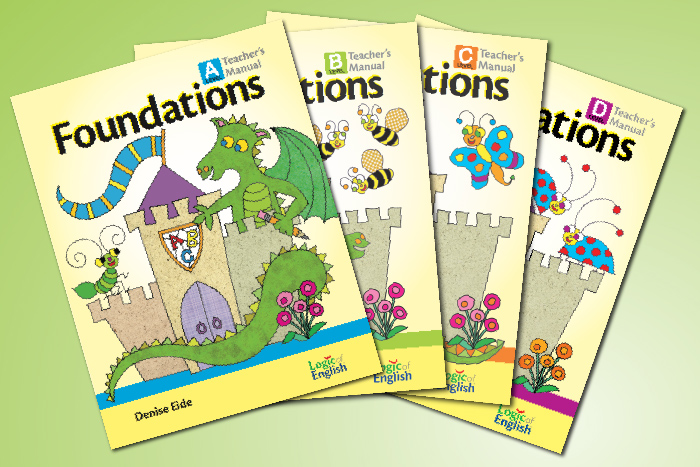
If you do end up supporting your own kids without formal OG training, I strongly suggest the following programs:
Believe In Them
Most importantly, believe in your child. Their future is not limited in any way if they believe in themselves.
Remember, you are the parent and this is your child.
There are days we all feel fear and are just overwhelmed.
At the end of every day, your love for your child will help you find the path they need to be successful.
Make sure that your children spend time building upon their strengths and not just facing their weaknesses.
Dyslexia & Orton-Gillingham: Every Child Can Learn to Read
A big thank you to Karee for lending her expertise in the Orton-Gillingham method of reading instruction.
More than anything else in her post, what speaks to me most as a mom, educator and lover of kids, is this.
Her heartbeat for the success of every child.
Karee received a B.A. in Political Science from Brigham Young University and a master’s degree in Political Science from the University of Utah. She worked as a lobbyist for the American Federation of Teachers and as a trainer for the Utah State Department of Health, before deciding to be a stay-at-home mom. Karee was a founding member of Decoding Dyslexia Utah. She now lives in South Carolina with her tribe of dyslexics including herself, her husband, one son and three daughters.
To contact Karee about her services: dyslexiasolutionsfortmill@gmail.com or call her at 801-455-2402
This post may contain affiliate links. As an Amazon Associate, I may earn a nominal fee from qualifying purchases. Thank you for your support. See my disclosure policy for more info.
Does your child struggle to remember?
What they’ve read? Multi-step directions?
What you asked them to do 5 min ago?
If so, take the Homeschool Teacher Training to help!
- Auditory Processing vs Language Processing
- How they impact literacy, communication & behavior
- What you can do to change the trajectory of your child’s future by addressing underlying issues!